
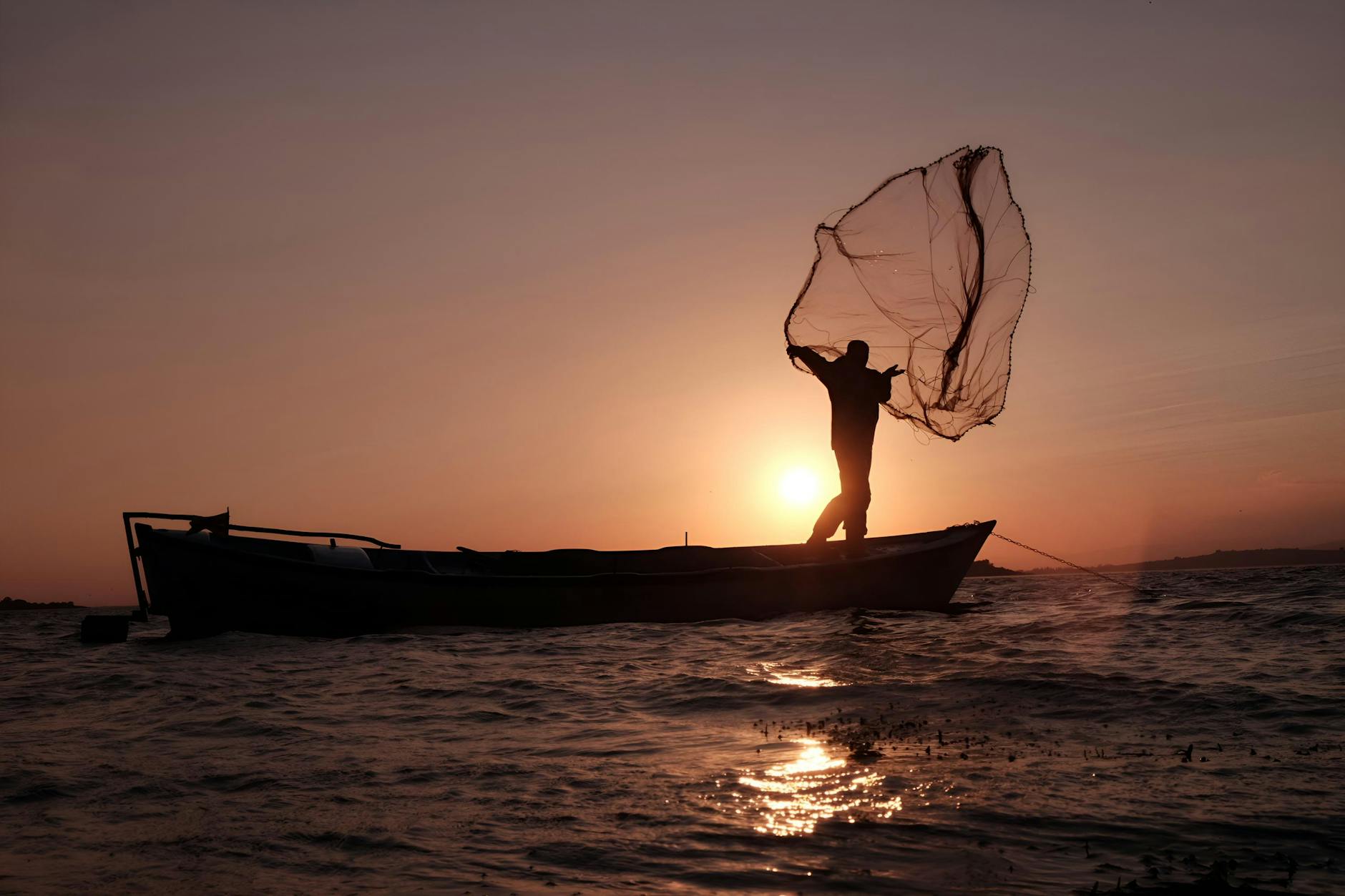
Traditional and sustainable capture fisheries is comparable to hunting activities and hence involve an activity of procuring from nature – not grow, farm or harvest!
This difference is important also to understand the pathway differences between the traditional agro-ecology framework and the need for an additional and more nuanced aqua-ecology framework and discourses around it. Traditional fishing is not a farming or agricultural activity. This realization is amiss in the post-colonial countries where fishing and pastoral activities are clubbed under ‘agriculture’ and governed by bureaucrats, experts and departments that are mandated in the discipline of agriculture.
We must help build the argument among both natural resource-based traditional communities that farmers and fishers are equally impacted by growing menace of industrial aquaculture. This argument gets strengthened only when the nuances of the aqua ecology linkages are built and correlated scientifically.
Realizing this difference, National Fisheries Solidarity Organization (NAFSO) of Sri Lanka initiated the establishment of “Our Ocean School” which was officially inaugurated on 8th of June 2026. The first Training-of-Trainer’s course is scheduled to be conducted from 12-15 August 2026 in Negombo, Sri Lanka for 34 registered youth participants from 14 countries: Bangladesh; Belieze; Equador; India; Indonesia; Kenya; Philippines; Maldives; St. Lucia; Senegal; South Africa; Trinidad & Tobago; Thailand and Uganda in addition to 17 participants from Sri Lanka.
Through the concept of Aqua Ecology, NAFSO hopes to promote low-impact fishing practices, protection of aquatic ecosystems, and recognition of traditional ecological knowledge held by fishing communities. It also highlights the importance of customary tenure rights and community stewardship of fisheries resources while promoting youth engagement in fisheries.
NAFSO’s curriculum under the Ocean School combining both Aqua & Agro Ecology is designed as a human rights-based, ecological, and people centered learning framework that responds to these challenges. It integrates Agro Ecology and Aqua Ecology with human rights, environmental justice, gender equality, and promotion of participation of youth leadership, grounded in Sri Lankan realities and traditional knowledge systems.
The designed curriculum of Aqua & Agro Ecology, provides a rights-based and ecological learning framework aimed at strengthening food sovereignty in Sri Lanka. Rather than treating food as a commodity, the curriculum affirms food as a right, a culture, and a shared ecological responsibility. It responds and addresses growing threats to local food systems caused by climate change, ecological degradation, industrial fisheries, intensive industrial aquaculture and policy frameworks that prioritize export-oriented economic growth over community well-being and their right to food. It is the natural resource-based traditional communities of fishers and farmers who decide how food is produced, distributed, and consumed while maintaining control over land, water, seeds, and fisheries, while protecting the rights of food producers.
This is exactly why NAFSO’s curriculum emphasizes that sustainable food systems depend on healthy ecosystems, protected rights, and democratic governance of natural resources.
A key focus of the curriculum is to understanding whole ecosystems. It highlights the interconnections between rivers, tanks, wetlands, lagoons, coastal waters, forests, and agricultural landscapes. These ecosystems sustain fisheries, farming, milk farmers, biodiversity, and community livelihoods. The curriculum stresses the need to protect mangroves, coral reefs, seagrass beds, water catchment areas, and traditional tank cascade systems to ensure sustainable food production and ecological resilience and to ensure food sovereignty. The curriculum critically examines global and national trends affecting fisheries, including industrialization, industrial aquaculture, overfishing, export-driven supply chains, and climate-related changes in fish stocks. It explores how policies and technologies linked to the Blue Economy and industrial fisheries can undermine small-scale fishers, damage ecosystems, dispossess marginalized communities from their resources and weaken local food security.
Environmental protection is a central component of the curriculum. It emphasizes the need to prevent pollution of water bodies from industrial waste, chemicals, plastics, nuclear wastes, clinical wastes dumping, and other contaminants, recognizing that clean water is essential for clean and nutritious food. We emphasize, “No healthy Food, without clean water” in our programs.
The curriculum also raises concerns about destructive fishing practices, bottom trawling, industrial aquaculture, monocultures, and genetically modified fish technologies that threaten ecological balance and community livelihoods.
Food sovereignty is closely linked with human rights and environmental rights, including the right to food, the right to livelihood, and the cultural rights of fishing and farming communities. The curriculum equips participants with knowledge of international and national policy frameworks relevant to fisheries, oceans, climate change, and biodiversity. It touches number of SDGs specifically, SDG 14b.
The curriculum also addresses growing challenges such as privatization of water bodies, ocean grabbing, industrial expansion, extractive developments including sand, gas and oil, and eventually dispossess resources and displacement of fishing communities. It promotes participatory tools such as ecosystem mapping, legal literacy, and community advocacy to strengthen local control over natural resources.
Special attention is given to gender justice and youth leadership. Women play crucial roles in fisheries and food systems but often face exclusion from decision-making. The curriculum seeks to promote women’s participation and leadership while recognizing youth as future custodians of ecosystems. It encourages intergenerational knowledge exchange and presents fisheries as a dignified and sustainable livelihood for young people.
Finally, the curriculum outlines pathways toward food sovereignty through Aqua & Agro Ecology, community stewardship of ecosystems, rights-based governance, policy engagement, and stronger participation of youth and women. It presents food sovereignty not as a single outcome but as a transformative process that reconnects ecology, culture, rights, and community empowerment.
NAFSO through the World Forum of Fisher Peoples’ (WFFP) expects to open and expand the training opportunities in future to interested participants from WFFP member countries based on research conducted worldwide and incorporating the findings in the training courses, to be developed in all related subject areas.
Compiled and written by:
Freddie Jayawardena
Program Manager WFFP
26-06-2026
Leave a Reply